

Larp at the Edge of the Amazon: How Larpocracy Brought Participatory Art to COP30
In November 2025, as world leaders gathered in Belém for the COP30 climate conference, something quieter was unfolding in the theatres, museums, and cultural spaces of the city. Fifteen Brazilian artists, working with the immersive theatre company ZU-UK as part of Larpocracy's Work Package 4, were sharing participatory performance works with the public: works built not to be presented and watched, but to be engaged with.
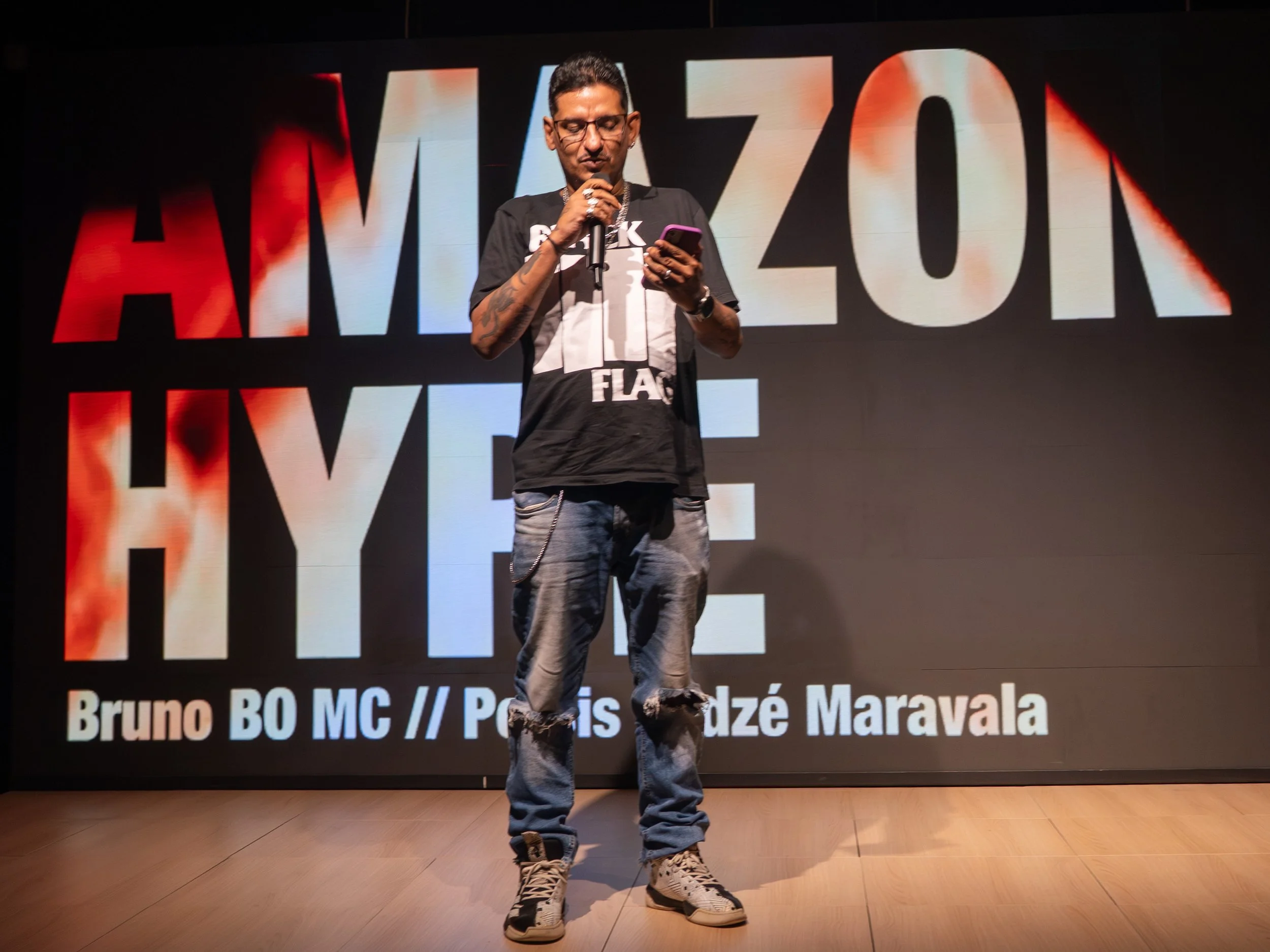
This was the culmination of DRIFT: a ten-day artistic residency held at the Federal University of Pará (UFPA) in late October and early November 2025. Over the first seven days, an interdisciplinary group of fifteen artists from across Brazil developed individual participatory works while learning from one another through intensive daily testing and feedback. Over the following days, those works were opened to public audiences.
The residency was deliberately timed and placed. Belém sits at the mouth of the Amazon, and the artists were invited to respond to themes of climate, the forest, and the lived realities of the region. The works that emerged were strikingly varied, representing the rich, diverse and deep make-up of local artistic practices: a silent bathing ritual; a collaborative rap composition; a clown professor lecturing on climate change while participants sweltered under layers of winter clothing; a sensory journey for participants in near-darkness; a funeral rite for the spirit of the forest. What they shared was a commitment to bringing audiences into relationship with one another, rather than positioning them as spectators.
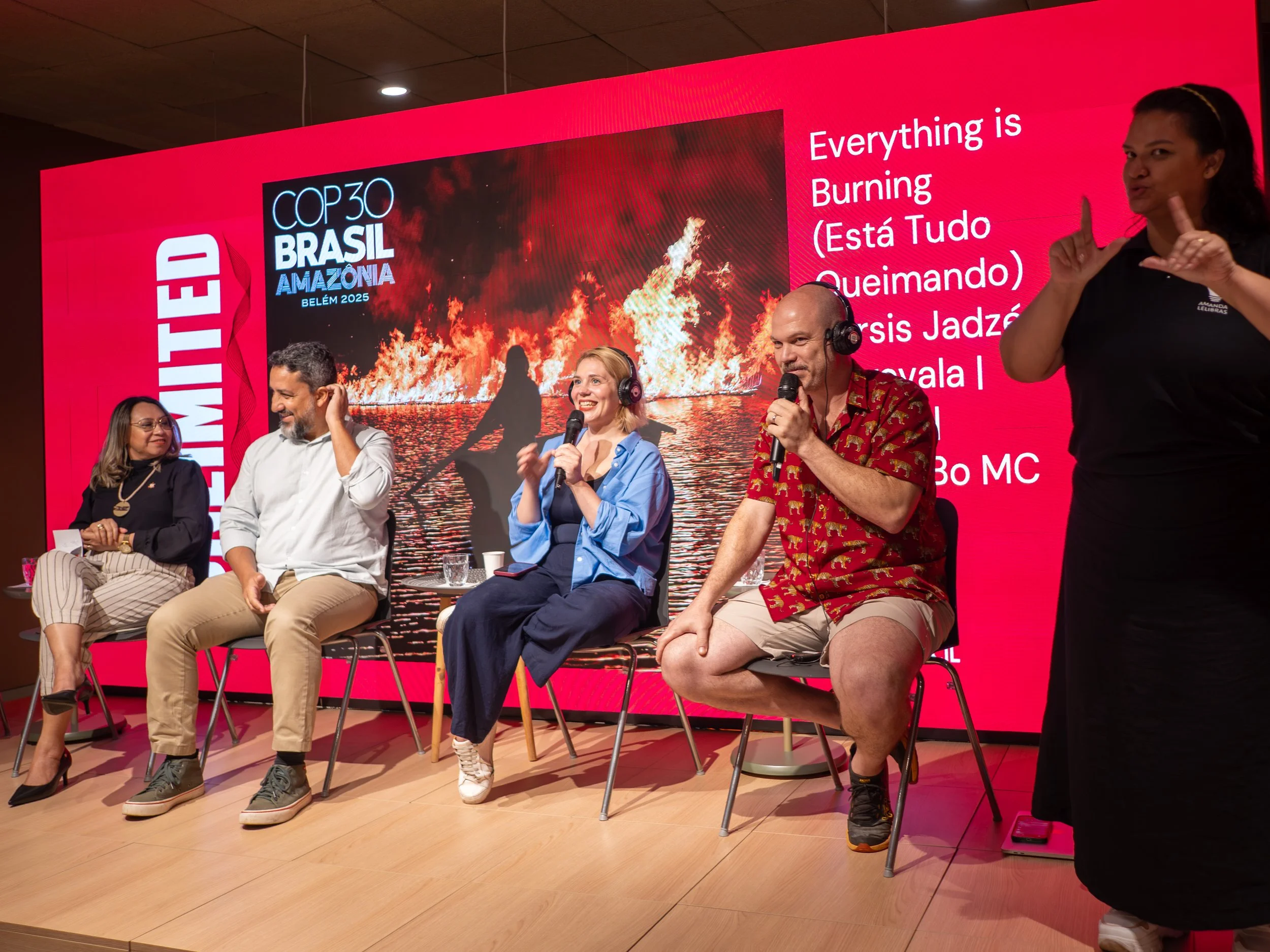
Among the works was Tudo Está Queimando (Everything is Burning), developed by ZU-UK with the Belém artist Bruno BO MC, a piece using bone-conduction headphones to guide participants, in small groups, through a shifting landscape of storm and calm, asking what kinds of listening and care might sustain us in a time of ecological crisis.
Recognising that COP30 created an intensely crowded cultural environment, the DRIFT programme worked through multiple trusted partners to reach audiences it could not have reached alone. Performances and events took place across the Federal University of Pará, networks of the British Council, events curated by UNLIMITED (a leading UK disability arts organisation), the Museu das Amazônias, and the Gasômetro cultural complex. A public forum on art, climate, and disability was held at the Museu das Amazônias with UNLIMITED, and a panel on cultural inclusion in the context of climate emergency took place at the Gasômetro.
The programme's reach extended well beyond those in the room. Dissemination through Portuguese-language community networks built by ZU-UK over two decades in Brazil meant the work connected with local audiences at scale: online engagement increased substantially during the COP30 period, with a high proportion reaching audiences new to the project.
And the programme left things behind. Partner institutions reported longer-term developments, including the development of a perament sensory, neurodivergent-friendly space at the Museu das Amazônias, a new collective of artists, and continuing conversations around inclusive cultural policy, small but real signs of how participatory artistic methods can leave an institutional trace when they meet a major civic moment.
The full findings from DRIFT are documented in Larpocracy's WP4 report, Lowering Barriers to Cultural Participation through Larp and Larp-adjacent Practices, available on Zenodo: https://zenodo.org/records/18823127