

Between 4 and 7 October, our PhD researcher from Uppsala University, Weronika Szatkowska, attended the Nordic Computer-Human Interaction Conference in Vaasa, Finland. During a full-day workshop on Designing for the Democratic Pulse: Engagement, Silence, Friction, and Storytelling, run by researchers from the University of Oslo, Weronika exchanged ideas about our work at Larpocracy.
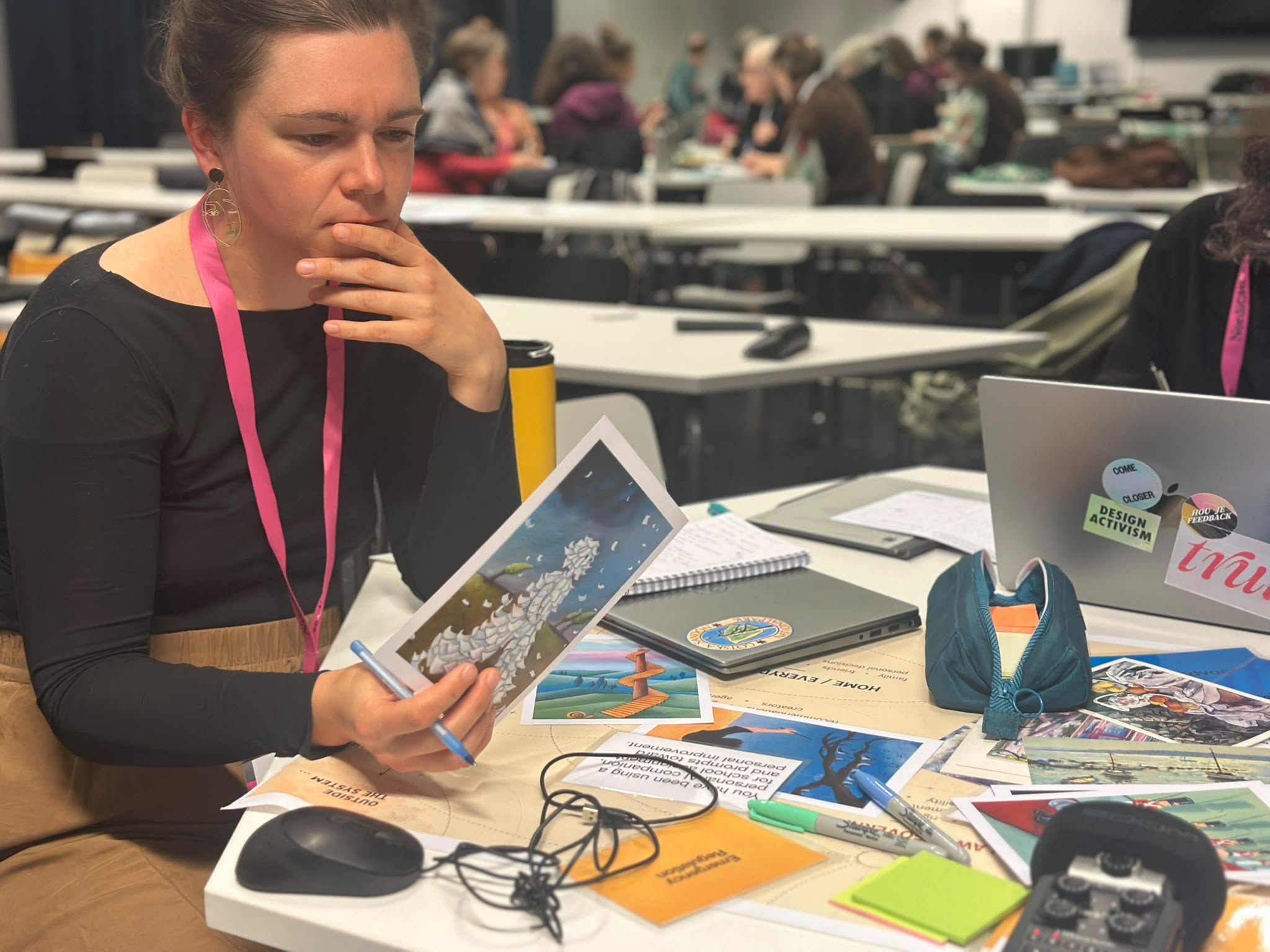
The workshop supported collaborative exploration across multiple perspectives and themes. Through activities such as collective mapping, speculative ideation, low-fidelity prototyping, and reflective discussion, participants examined how technologies, democratic values, and power relations are entangled, and explored alternative approaches to technology design that support deeper, more inclusive democratic practices. Weronika participated in a speculative design process on the deliberative use of AI in education.
Weronika, together with Jakob Bandelin from HCI Uppsala University group, run also a workshop session entitled When Design Becomes Visible: Structural Awareness and Reimagination in Playable Systems, focused on systemic analysis and reimagination in playable systems like larps or simulations to speculate about alternative futures. It contributed to a larger study on debriefing design, conducted as part of WP3.
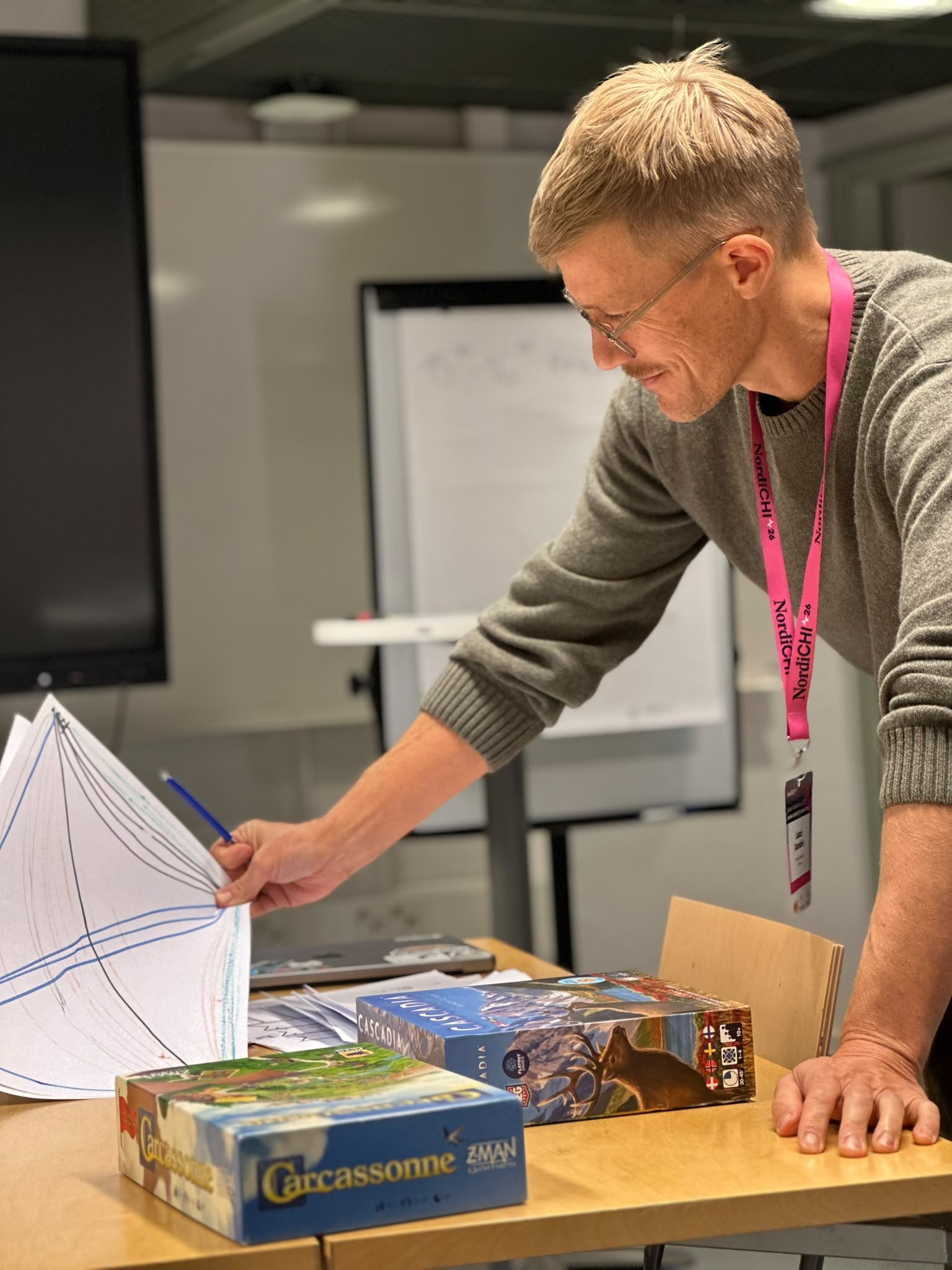
Participants of the workshop explored the alternative debriefing structure, based on larp debriefs, critical literacy, and speculative design. The structure consisted of:
Exposure. Identifying goals, roles, incentives, absences, and assumptions in a playable system.
Mapping. Comparing those structures with the situation or world the system represents.
Reimagination. Changing parts of the system and exploring what different structures make possible.
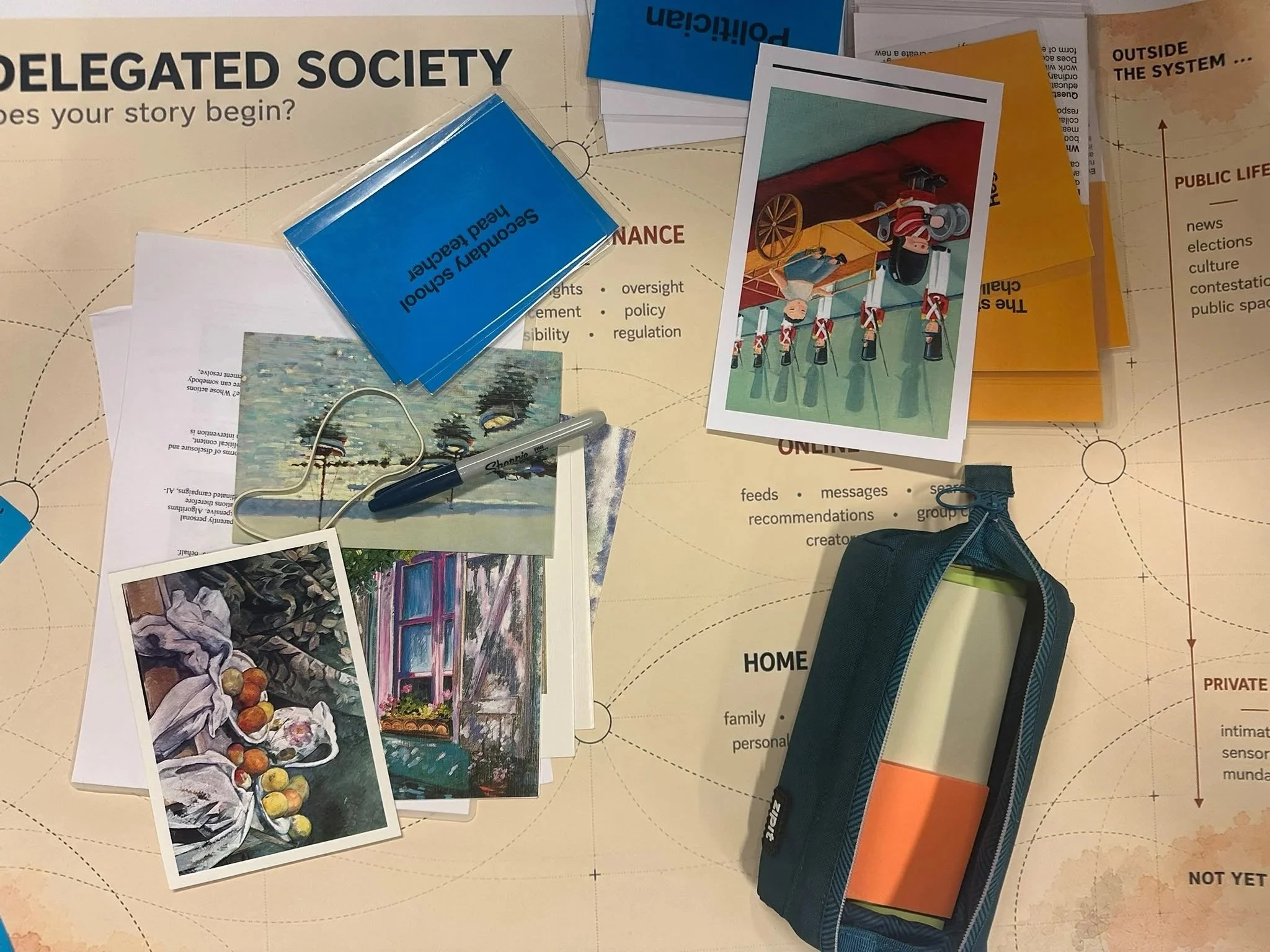
Participants of the workshops discussed, for instance, how our internalised assumptions and procedural rhetoric contribute to sustaining power dynamics and inequalities in educational game experiences, or how to build societies in a technology-driven world which remain inclusive and appreciative of elderly people.
These exchanges highlighted the potential of larps and other playable systems to support critical reflection on how democratic participation is structured, whose perspectives are included, and which assumptions remain unchallenged. For Larpocracy, the discussions offered valuable opportunities to connect our research on debriefing with broader questions of technology, power, and inclusion. By moving from exposure and mapping to reimagination, this work explores how participants can question the systems they encounter and consider how those systems might be designed differently.