

In Loving Memory of Persis Jadzé Maravala
It is with profound sadness that the Larpocracy consortium mourns the passing of Persis Jadzé Maravala — artist, researcher, collaborator, Artistic Director of ZU-UK, and a deeply valued member of our community.

Jadzé died in Rio de Janeiro following a catastrophic brain haemorrhage caused by a ruptured cerebral aneurysm.
For more than two decades, Jadzé created work of extraordinary imagination, courage and generosity, expanding the possibilities of participatory and immersive performance. Through ZU-UK and her many collaborations, she created encounters that brought strangers closer — inviting people to meet, listen, play, care for one another and, sometimes, simply be together.
Her work was never concerned with immersion for its own sake. At its centre was a persistent enquiry into human connection: what happens when we encounter another person, how we negotiate vulnerability and responsibility, and what performance might make possible between us.
Jadzé placed the ethics of caring for participants alongside artistic experimentation. For her, empathy was radical — not simply nice or kind, but difficult: uncomfortable, challenging and ultimately transformational.
Her work brought people closer
Within Larpocracy, Jadzé brought this commitment to participation, care, play and human connection into our collective exploration of live action role-play and democratic culture.
Her curiosity was infectious, and her pursuit of enquiry, detail, depth and quality was relentless. She asked difficult questions, challenged conventions and made space for experimentation. Just as importantly, she worked to create space for people whose backgrounds too often exclude them from the table.
These principles were central to her contribution to Larpocracy. Her practice invited us to consider participation not simply as being present, but as a relationship carrying responsibilities: to listen, to attend to others, to negotiate differences and to recognise the vulnerability involved in sharing an experience.
Her understanding of empathy as something demanding rather than comfortable will continue to resonate throughout the project and among the artists, researchers and communities who worked alongside her.
DRIFT Belém: care, experimentation and artistic encounter
Jadzé was fundamental to developing DRIFT, Larpocracy’s artistic residency in Belém, Brazil. Her method, work, care and artistic vision were essential to the process and to the community of local artists who engaged with the residency.
DRIFT was not simply a space in which artists came together to produce work. It became a space for experimentation, exchange, listening and transformation. Jadzé’s approach helped shape those conditions. She encouraged artists to take risks, question assumptions, attend carefully to participants and one another, and explore how intimacy, embodiment, play and care could become artistic materials in their own right.
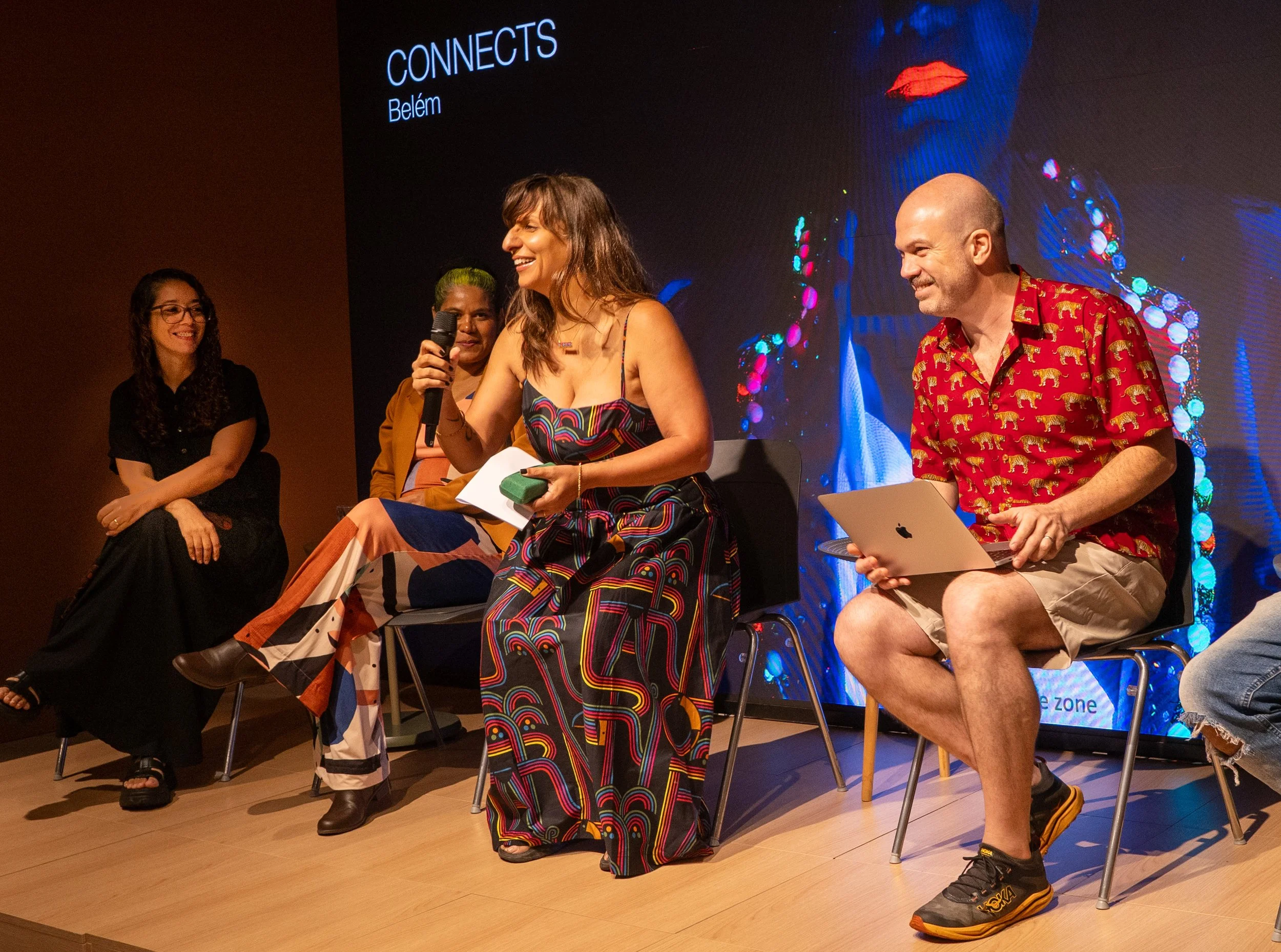
For the artists who took part in Belém, encountering Jadzé meant encountering the force of a practice developed over decades. She was a powerhouse: rigorous and demanding, but also extraordinarily generous in the way she shared her thinking, challenged ideas and opened possibilities for others.
Her influence could be felt not only in individual works, but across the residency as a whole — in the questions artists asked, in the relationships they established with participants, and in the attention given to trust, proximity, vulnerability and care. The works developed during DRIFT inevitably carried the distinct practices and perspectives of each local artist, but many were also touched, challenged and expanded through their encounter with Jadzé’s methodology and vision.
Perhaps one of the most meaningful legacies of DRIFT is therefore not something that can be documented through a single artwork or outcome. It resides in the artists themselves: in practices that were questioned, ideas that were opened, relationships that were formed and possibilities that may continue to unfold long after the residency.
In this sense, Jadzé’s contribution to DRIFT exemplified something at the heart of her wider practice: her work brought people closer.
A legacy carried through practice
Jadzé’s contribution cannot be contained within individual performances, projects or publications. It lives in the encounters she created and in the people who experienced them, made them alongside her and were changed by them.
Her work reminds us that artistic practice can create conditions for people to meet differently — and that care, play, vulnerability and experimentation can become meaningful ways of thinking about how we live together.
This legacy is particularly tangible within Larpocracy. It continues through the questions she brought to the project, through the collaborations she helped shape, and through artists and researchers — including those who worked alongside her in Belém — who will carry aspects of those encounters into their own future practices.
Our love and deepest sympathies are with her husband and long-term artistic collaborator Jorge Lopes Ramos, their daughter, Jadzé’s wider family and friends, her colleagues at ZU-UK, and everyone whose life and practice she touched.
We are profoundly grateful to have shared part of this journey with her.
Her presence will be deeply missed. Her questions, ideas and artistic legacy remain with us, continuing through the work and through all of us who experienced it, made it with her and were changed by it.
In loving memory of Jadzé.